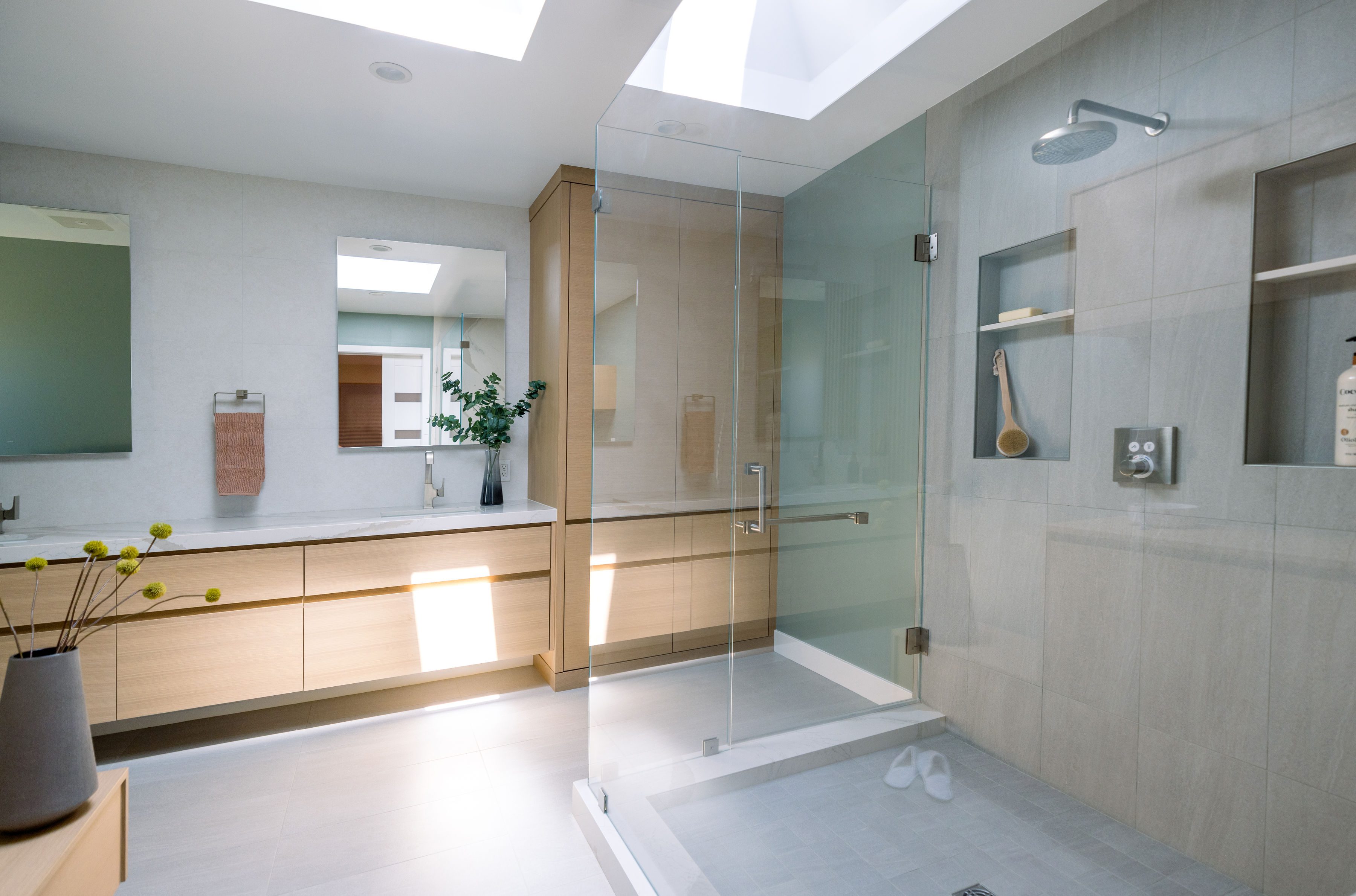

A primary suite bathroom should make everyday routines feel easier, not more complicated. Yet many homeowners discover that once two people are sharing the space, even a beautifully finished bathroom can start to feel crowded, inefficient, or oddly stressful. The issue usually isn’t style, it’s planning.
A well-designed primary suite bathroom is built around how two people actually use the space. When layout, storage, lighting, and plumbing are thoughtfully coordinated, the bathroom supports parallel routines without chaos. The result is a space that feels calm, functional, and personal, not a daily negotiation.
Start with How Two People Move Through the Space
Before choosing tile or fixtures, it’s critical to understand traffic flow. In a primary suite bathroom, mornings and evenings often involve simultaneous use: brushing teeth, showering, getting dressed, or winding down at night.
Clear circulation paths prevent bottlenecks. That means enough clearance around vanities, showers, and closets so both people can move comfortably without constantly stepping around each other. Door placement matters here as well — pocket doors or strategically placed swing doors can preserve flow and privacy without eating up valuable space.
A good layout makes it possible for two people to get ready at the same time without feeling rushed or in each other’s way.
Separate Wet and Dry Zones for Better Function
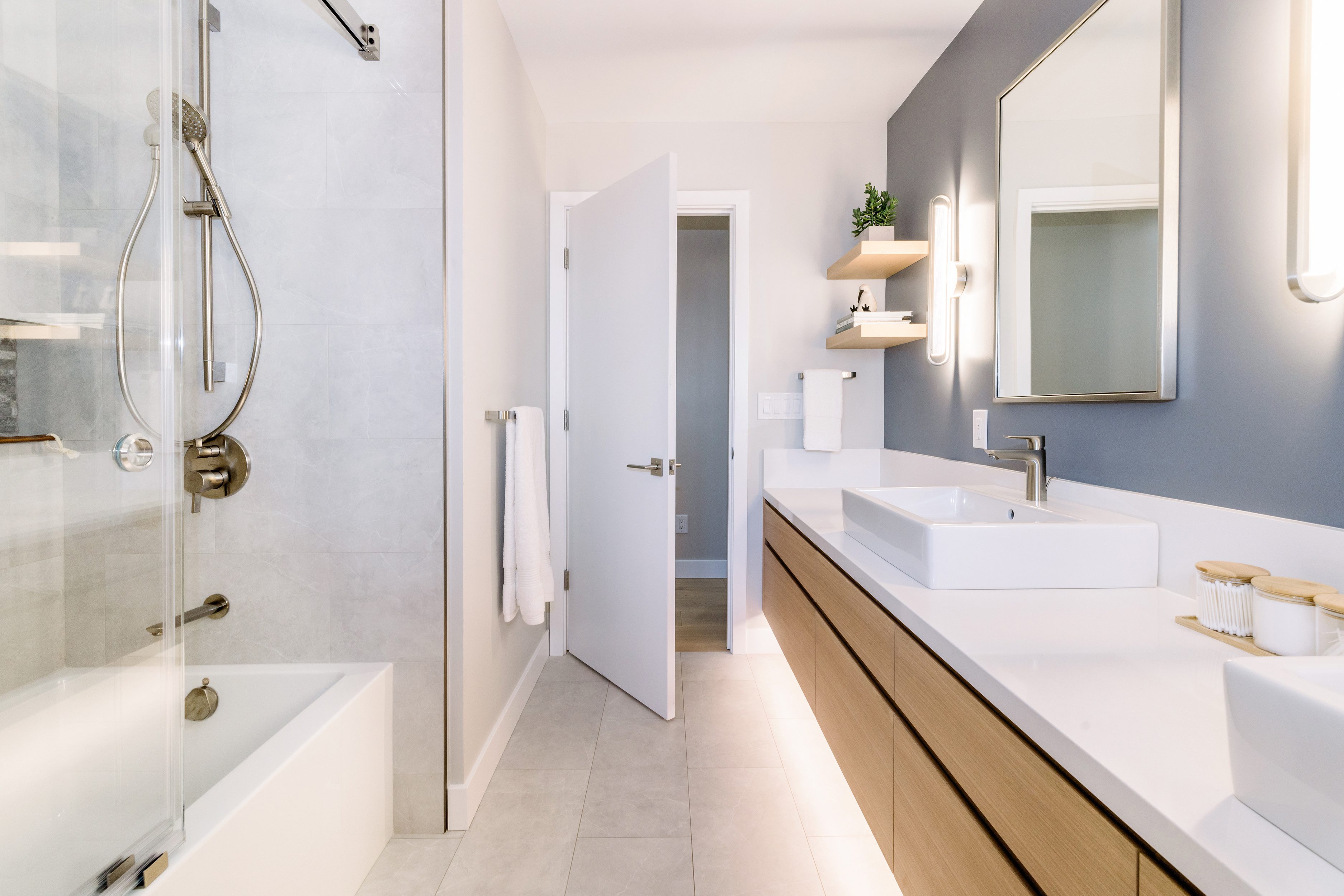
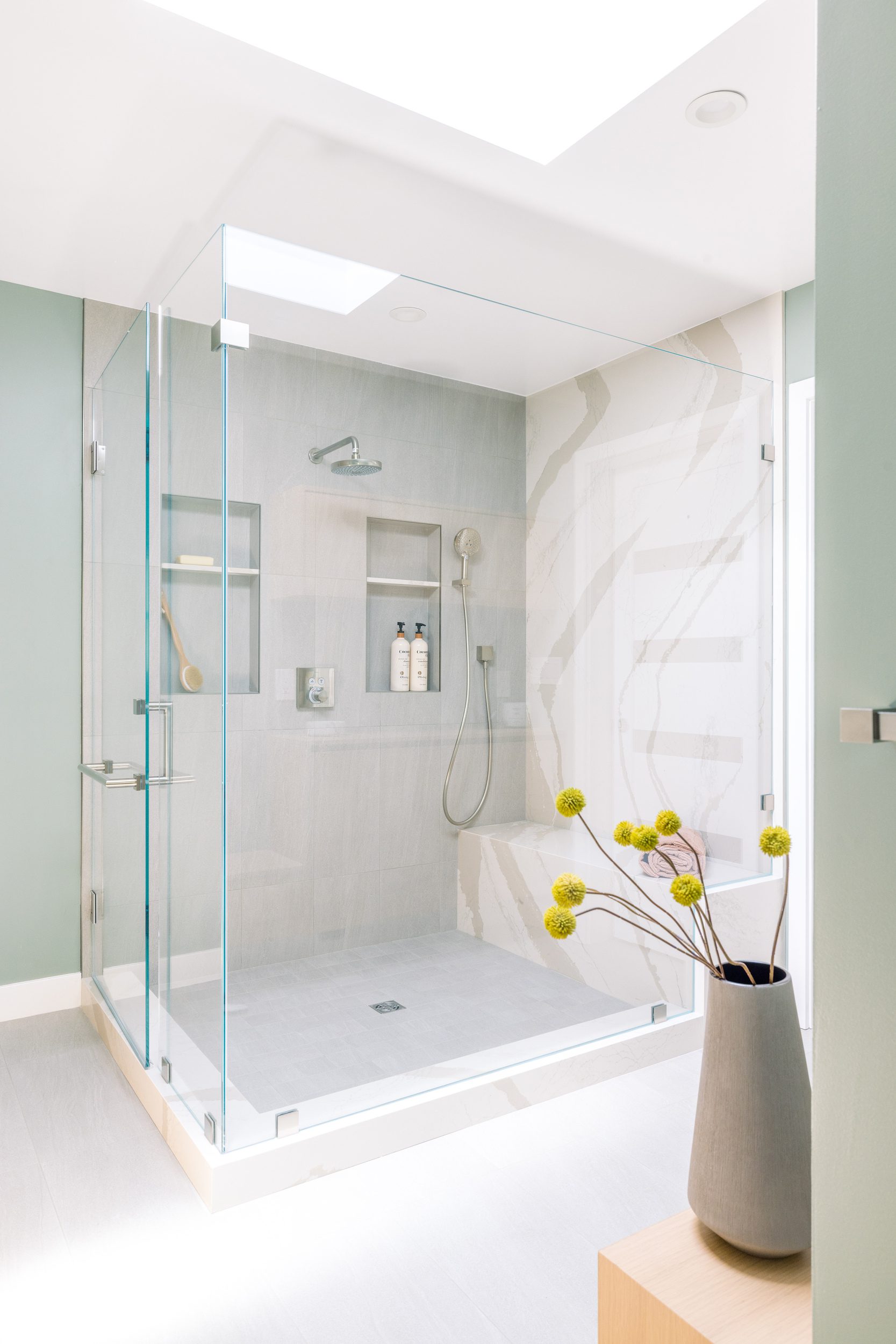
One of the most effective strategies in primary suite bathroom design is separating wet and dry areas. Keeping showers, tubs, and toilets distinct from vanities and storage zones reduces congestion and helps the space function more efficiently.
For example, an enclosed shower and toilet room allows one person to use the vanity while the other showers. This kind of separation also improves acoustics, humidity control, and long-term durability.
Even in smaller primary suite bathrooms, partial walls, glass enclosures, or thoughtful zoning can create visual and functional separation without making the space feel closed off.

Double Vanities — Done Right
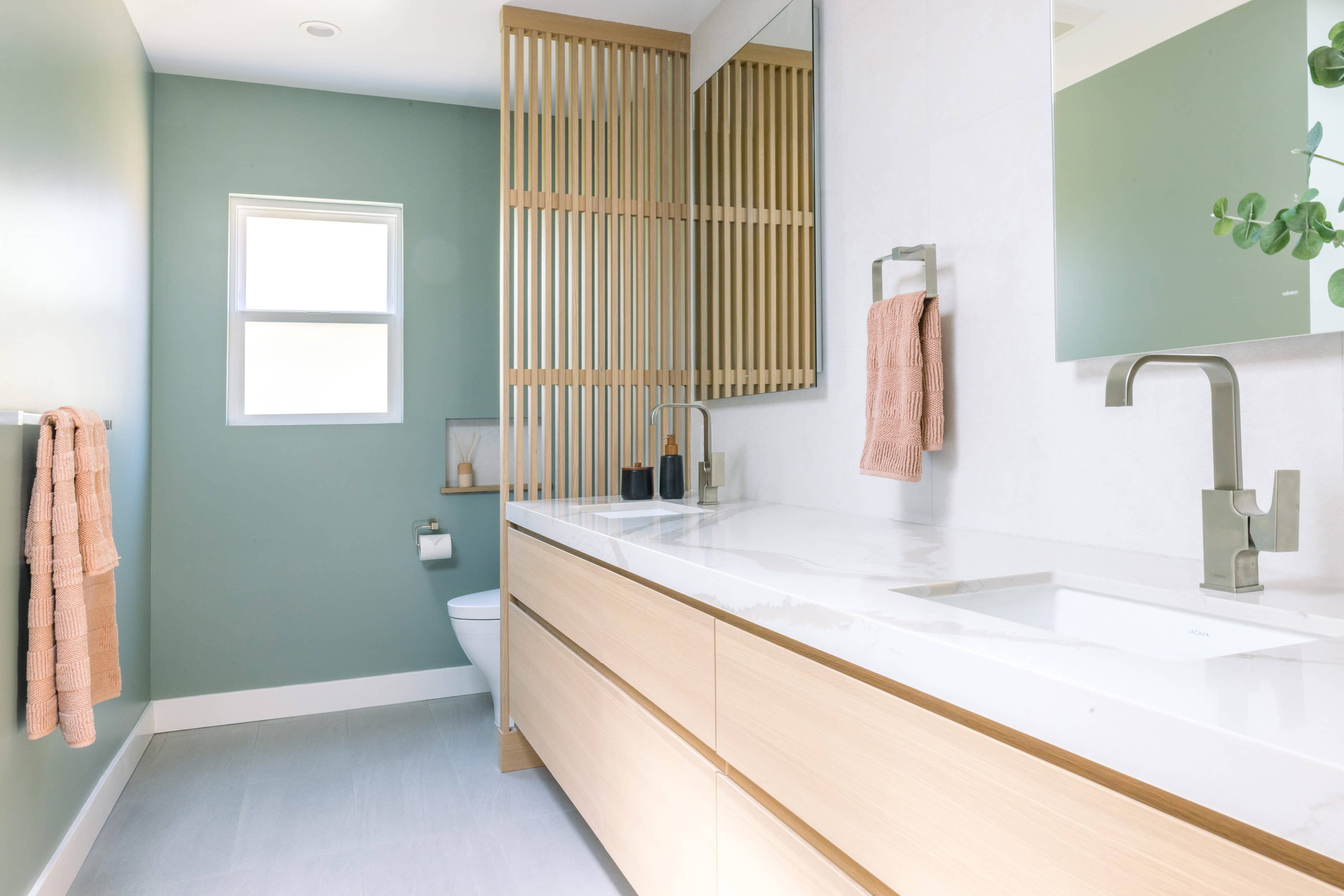
Double vanities are often seen as a must-have, but simply adding two sinks isn’t enough. Spacing, storage, and lighting are what make them truly functional.
Each person should have:
- Dedicated drawer and cabinet space for daily essentials
- Individual task lighting that minimizes shadows
- Enough counter space to avoid overlap
In some cases, two separate vanities — rather than one long shared run — offer better usability and a greater sense of personal space. This approach also allows for subtle personalization without disrupting the overall design.
Storage That Reflects Real Life
Clutter is one of the biggest sources of stress in shared bathrooms. Smart storage design keeps surfaces clear and routines streamlined.
A successful primary suite bathroom includes a mix of:
- Everyday-access storage near vanities
- Deeper cabinets or linen storage for backup items
- Thoughtfully placed niches in showers and tubs
When each person has clearly defined storage, the space feels more organized and less competitive. Storage should support habits, not fight them.
Lighting That Adapts to Different Needs
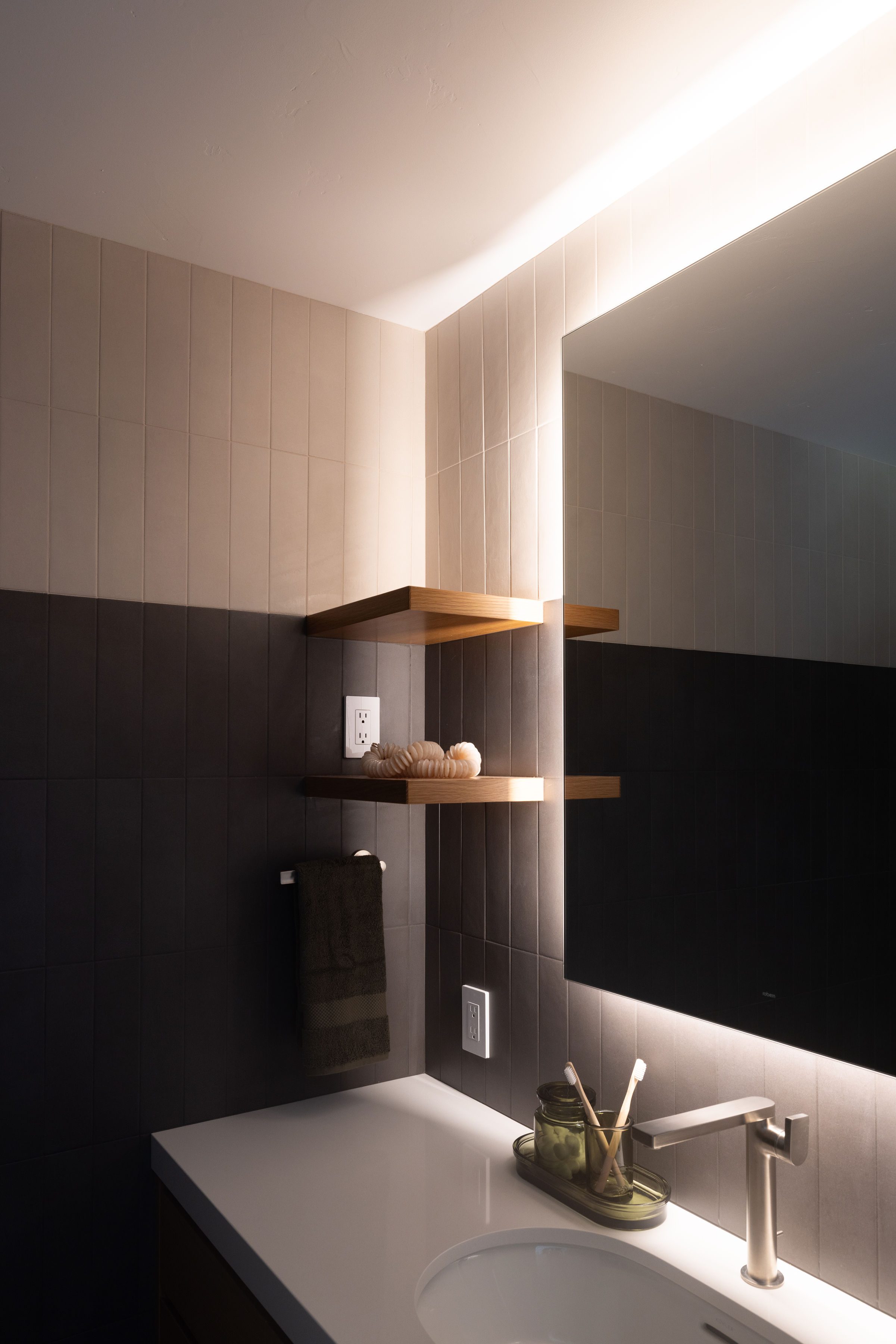
Lighting in a primary suite bathroom needs to do more than look good. It should adapt to different times of day and different users.
Layered lighting is key:
- Task lighting at mirrors for grooming
- Ambient lighting for overall comfort
- Dimmable or low-level lighting for nighttime use
This approach allows one person to wake up early or stay up late without fully disrupting the other: a small detail that makes a big difference in daily life.
“
A layered lighting plan—ambient, task, and accent—elevates the primary bathroom into a serene, spa-like space while supporting safe, functional daily routines. Dimmers provide precise task lighting, soft ambiance, and highlight key design details.”
~Joy Allen, Design Supervisor at Next Stage Design + Build
Finishes That Add Comfort Without Sacrificing Function
Once the layout and function are right, finishes can bring the space to life. Materials, textures, and fixtures should enhance comfort while remaining practical and easy to maintain.
In a shared primary suite bathroom, cohesive finishes create a sense of calm, while subtle variations — like mixed metals or personalized storage areas — allow each person to feel represented. The goal is balance: a space that feels shared, but not generic.
A Primary Suite That Supports Both Connection and Independence
The best primary suite bathrooms don’t force compromise. They’re designed for coexistence. With thoughtful zoning, smart storage, and intentional layout decisions, the space supports two people’s routines while still feeling like a retreat.
When a primary suite bathroom truly works, mornings start smoother, evenings feel calmer, and the space becomes less about managing logistics and more about daily comfort. That’s the difference between a bathroom that looks good and one that actually supports how you live.
Ready to start designing your perfect primary suite? Get in touch with the Next Stage Design + Build team today!