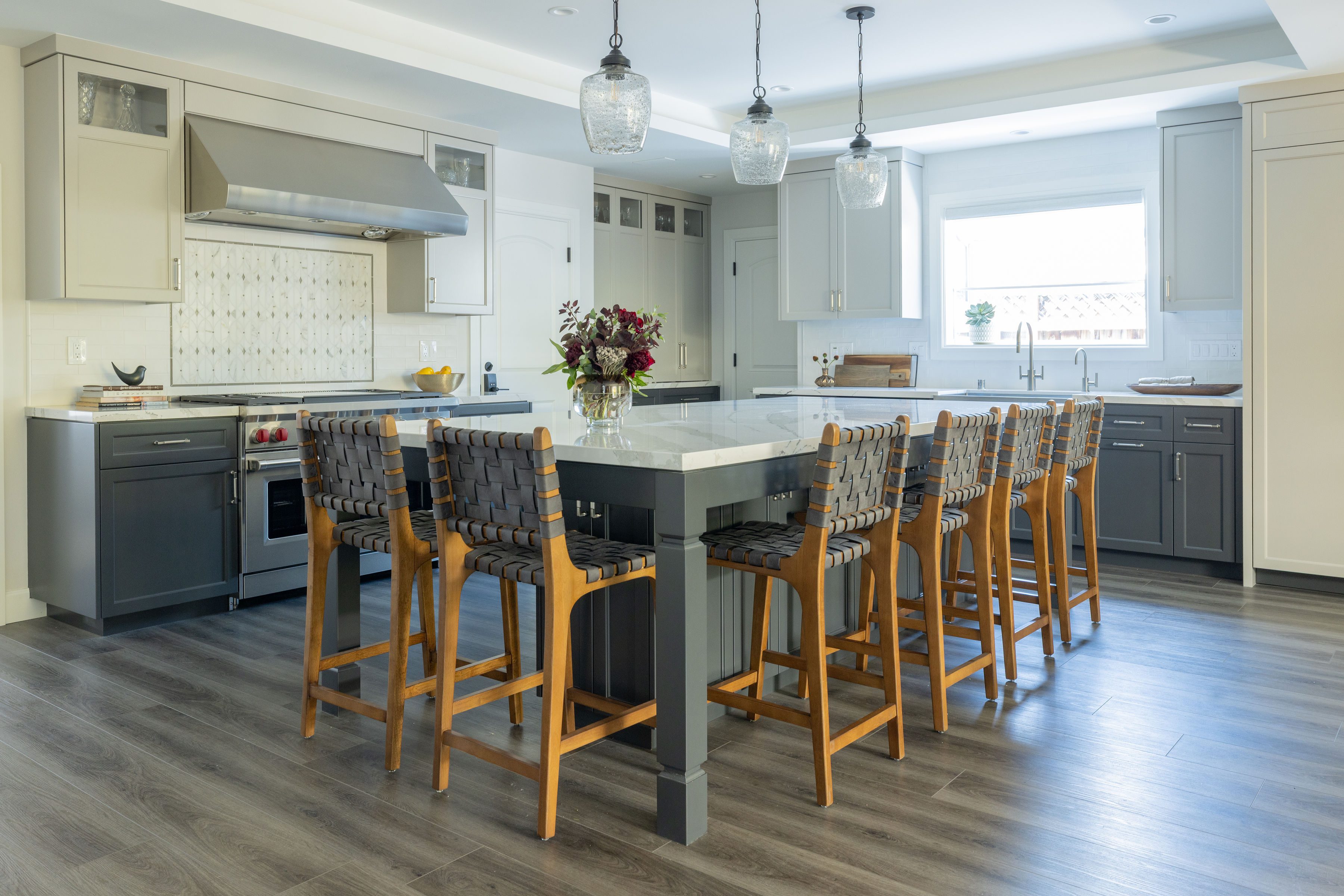

Ask most homeowners what makes a home feel luxurious and the answers tend to gravitate toward the obvious: a chef’s kitchen, a spa-like primary bath, an open floor plan with high ceilings. These things matter. But they’re not what separates a home that looks impressive in photos from one that feels genuinely elevated to live in every day.
The difference is almost always in the details — the accumulation of small decisions made well. Hardware that feels substantial when you close a drawer. Storage that anticipates your actual morning routine rather than forcing you to work around it. Lighting that shifts intuitively from task to ambient without requiring a manual adjustment every time the mood changes. Materials that feel better underfoot and to the touch the longer you live with them.
These are the luxury remodel details that are hardest to photograph and easiest to feel. They’re also the ones most likely to be underspecified in a remodel — because they require the most intentional thought, and because they’re far more difficult and expensive to add after the fact.
Hardware: Where Quality Announces Itself Quietly
Hardware is one of the most tactile elements in any home, and one of the most telling. The weight of a door pull, the resistance of a cabinet hinge, the smoothness of a drawer close — these micro-experiences happen dozens of times a day, and they register even when you’re not paying attention.
In an elevated remodel, hardware selection goes beyond finish coordination. It involves specifying mechanisms — soft-close hinges, full-extension drawer boxes, push-to-open systems where visible hardware would interrupt a clean line — alongside the aesthetic choices. Solid brass, unlacquered or hand-finished, ages in a way that mass-produced zinc alloy hardware never does. The investment is real, but so is the difference.
Finish consistency matters as much as quality. A kitchen with brushed brass pulls, chrome faucets, and matte black fixtures creates visual restlessness — regardless of the quality of the individual pieces. One of the clearest markers of a well-designed home is that the metal finishes tell a coherent story — not identical everywhere, but intentionally related.

Storage: Designed Around How You Actually Live
Generic storage is abundant. Purpose-built storage — designed around the specific routines of the people living in the home — is rare, and it’s one of the details that most consistently separates a remodel that feels considered from one that simply looks updated.
In a kitchen, this means understanding how the household cooks and shops before specifying drawer depths, appliance garages, or pantry configurations. In a primary suite, it means mapping out the morning routine — who gets ready first, where things land, what needs to be accessible versus stored away — before a single cabinet is drawn. In a mudroom or entry, it means thinking through what comes in the door every day and designing a place for all of it.
When storage is designed this way, the result isn’t just more organized — it’s calmer. Surfaces stay clear not because of discipline but because there’s a logical place for everything. That quality of daily ease is one of the defining characteristics of a home that feels luxurious to live in.

Lighting Controls: The Detail Most Homeowners Underestimate
Lighting quality is frequently discussed in remodeling. Lighting control is less often given the same attention — and it has an outsized effect on how a home feels at different times of day.
A well-designed lighting control system allows a kitchen to shift from bright and task-focused at 7am to warm and ambient at dinner without requiring four separate switches and a lot of guesswork. A bedroom that transitions from reading light to complete darkness with a single tap, or a bathroom where the overnight setting is already waiting when you walk in at 2am — these aren’t extravagances. They’re the kind of daily-life details that quietly make a home feel more responsive and more personal.
The key is integrating lighting control into the design phase, not specifying it as an afterthought. Conduit runs, switch placement, scene programming, and fixture selection all need to be coordinated together. Adding this layer after construction is completed requires reopening walls and re-running wire — work that could have been done once, correctly, during the remodel.

Materials: Chosen for Feel and Longevity, Not Just Appearance
Material selection in a luxury remodel requires thinking in at least two dimensions: how something looks today, and how it will look and feel five or ten years from now.
Natural stone, hardwood, unlacquered metals, and handmade tile all change with age in ways that add character rather than suggesting wear. These materials earn their higher cost not just at installation but over the life of the home. Engineered alternatives have improved significantly and are appropriate in many contexts — but the distinction matters, and it’s worth understanding what you’re specifying and why.
Tactile quality is equally important and often underweighted in the selection process. The coolness of honed marble underfoot, the warmth of wide-plank white oak, the subtle texture of a hand-plastered wall — these are things that make a home feel different to inhabit, not just to look at. Whenever possible, experiencing materials in person rather than from a sample chip or a photograph is worth the effort. What reads beautifully on a design board can feel cold or flat at full scale, and what looks simple in a photo can be remarkable in person.

Why These Details Require a Design-Led Process
The reason luxury remodel details are so often underspecified isn’t that homeowners don’t care about them. It’s that they require the most time, the most coordination, and the most intentional thought — and in a remodel where dozens of decisions are being made simultaneously, they’re the easiest ones to defer.
A design-led process treats these details as primary, not secondary. Hardware families are selected early and specified consistently across the project. Storage configurations are developed around user behavior before cabinetry is drawn. Lighting control is designed alongside the electrical plan, not after it. Material selections are made in the context of how they’ll interact with each other and with the light in the specific rooms they’ll occupy.
When these elements are given the attention they deserve, the result is a home that doesn’t just look finished — it feels finished. That’s the difference between a remodel that impresses and one that genuinely elevates daily life.
“
The details homeowners live with every day — the way a drawer closes, the weight of a pull, the finish on a faucet — are the ones that determine whether a remodel still feels right five years later. Getting those right isn’t about budget. It’s about intention.”
~Joy Allen, Design Supervisor at Next Stage Design + Build
Getting the Details Right from the Start
For homeowners in San Jose, Saratoga, Los Gatos, and other Santa Clara County communities planning a significant remodel, these details are worth addressing early — both because they’re harder to add later and because they shape the design decisions that surround them. Getting them right is less about spending more and more about thinking more carefully, earlier in the process.
Next Stage Design + Build brings this level of detail thinking to every project we take on. If you’re planning a remodel and want to talk through what a design-led approach looks like in practice, we’d love to have that conversation with you.