

A whole house remodel is one of the most significant investments a homeowner makes — and one of the easiest to approach in the wrong order. The impulse is to start with the most visible spaces: the kitchen needs updating, the primary bath feels dated, and the living room never quite worked. From there, it’s easy to end up with a collection of separate room projects rather than a coherent home.
The homeowners who are most satisfied with whole-home remodels are the ones who started with a different question. Not “what do we want to change?” but “how do we want this home to work?” That shift — from a list of fixes to a design vision — changes everything about how the project gets planned, phased, and executed.
Where Do You Start with a Whole House Remodel?
The right starting point isn’t a room — it’s a conversation about how the household actually lives. What are the daily friction points? Which spaces feel too small, too dark, or disconnected from the way the family uses them? Are there life changes on the horizon — kids leaving, aging parents, a shift to hybrid work — that should shape how the home is configured for the next decade?
These questions surface priorities that a room-by-room approach misses. They also reveal interdependencies: the kitchen that feels cramped may be partly a floor plan problem that affects the adjacent dining room and family space. Addressing it in isolation produces a better kitchen but not a better home. Addressing it as part of a whole-home design exercise opens up options that wouldn’t otherwise be visible.
This is the starting point of a design-led whole house remodel: a clear, honest picture of how the home needs to perform, before any decisions are made about what it should look like.
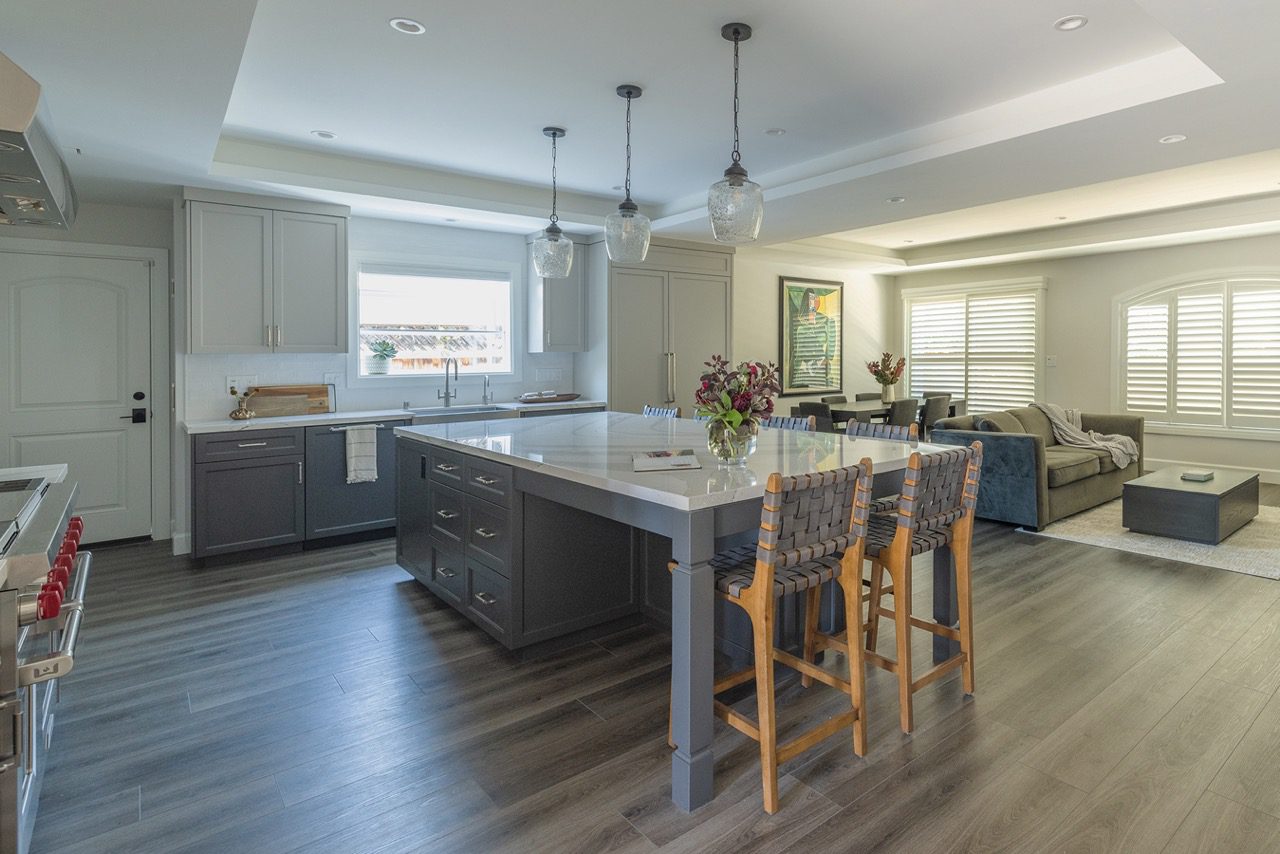
Systems First: What Needs to Be Resolved Before Finishes
One of the most common and costly mistakes in whole home remodeling is sequencing finish-level decisions before foundational ones. A beautifully designed kitchen installed over aging electrical service, inadequate ventilation, or plumbing that should have been replaced is a remodel that will need to be revisited sooner than it should.
Before design development on any significant whole house remodel, a thorough assessment of building systems is essential: the electrical service and panel capacity, plumbing condition and configuration, HVAC efficiency and distribution, insulation and weatherproofing, and the structural integrity of the framing and foundation. In many Santa Clara County homes built in the 1960s through the 1980s, one or more of these systems requires updating — and knowing that upfront changes both the budget and the sequencing of the project.
This isn’t discouraging news. It’s clarifying. A project that accounts for systems work from the start is a project that won’t require reopening walls, re-sequencing trades, or revising scope mid-construction. It’s the difference between a remodel that flows and one that compounds.
Design as the Organizing Principle
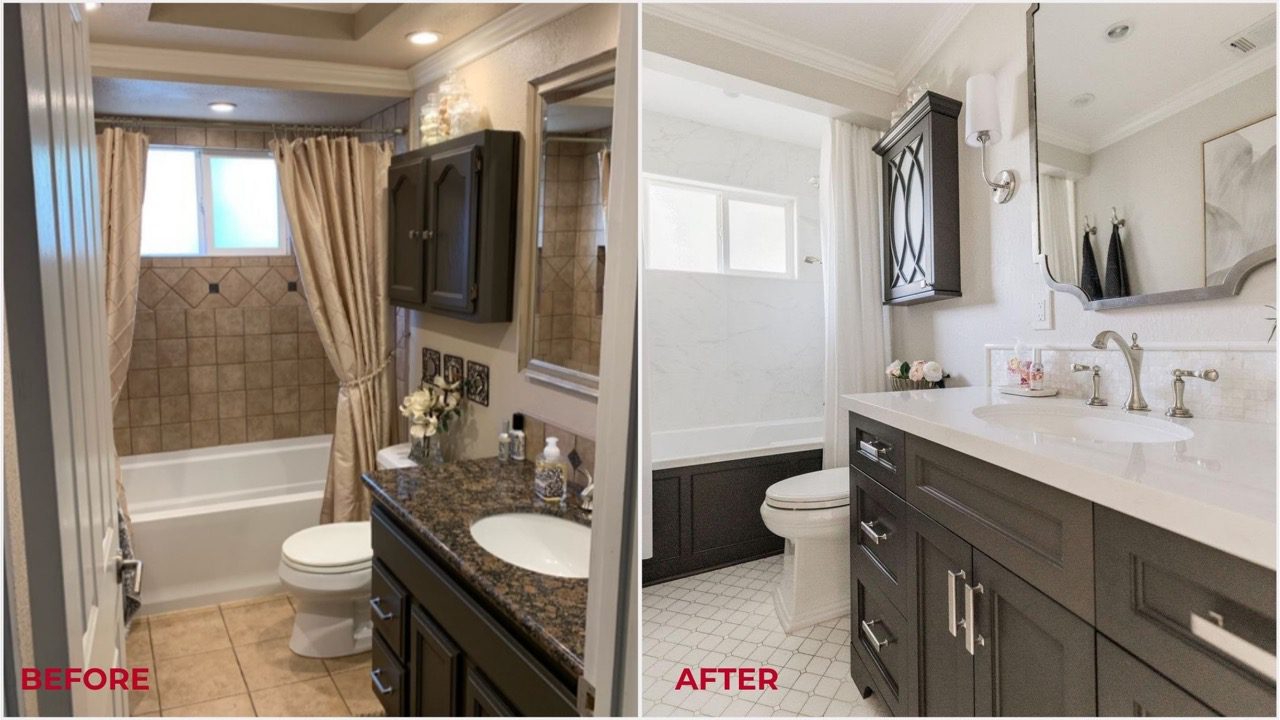
In a whole house remodel, design does more than determine what things look like. It determines how the project holds together. A unified design direction — an architectural language, a material palette, a set of spatial intentions — gives every decision a framework. When a question arises about whether to extend a material into an adjacent space, or how to handle the transition between two areas, or whether a detail is worth the additional cost, the design vision provides the answer.
Without that organizing framework, whole home remodels tend to drift. Decisions get made room by room, often by different people at different times, and the result is a home that feels updated but not coherent. The kitchen and the adjacent dining space don’t quite match. The primary suite feels like a different house than the rest of the upper floor. The entryway doesn’t set up what follows.
A design-led process prevents this by establishing the vision early and using it as the filter for every subsequent decision. Material selections, spatial configurations, and finish specifications all get evaluated against the same standard — does this serve the whole, or just the room?
“
A whole house remodel is really a conversation about how a family wants to live — not just what they want to update. When we start there, every room decision becomes easier because it’s connected to something bigger than the room itself.”
~Shelly Yoder, Project Designer, Next Stage Design + Build
How to Phase a Whole House Remodel Without Doing Work Twice
Most whole home remodels aren’t done all at once. Budget, life logistics, and the practical realities of living through a major construction project all point toward phasing — completing the project in stages over months or years.
Phasing done well is the chapters of one story. Each phase is complete and livable on its own, but it sets up the next phase rather than complicating it. Electrical and plumbing rough-ins for future phases get done during the current phase, while walls are already open. Flooring is specified with future spaces in mind so that extensions don’t require matching an existing material that may no longer be available. Structural work that affects multiple phases gets resolved early.
Phasing done poorly is a series of disconnected projects that create conflicts: a kitchen that required reopening walls to extend plumbing that should have been roughed in the first time, or a floor that can’t be matched because the phase it was specified for happened three years earlier.
The difference between the two is a phase plan developed from a whole home design perspective, not a series of independent room bids. This is what a design-build team provides: not just the work of a single phase, but the roadmap that makes each subsequent phase straightforward.

A Practical Starting Framework
For homeowners in San Jose, Saratoga, Los Gatos, Cupertino, Sunnyvale, and other Santa Clara County communities beginning to think through a whole house remodel, a useful starting framework:
- Start with a 10-year vision. How do you want to live in this home? What routines need to be supported, and what’s likely to change?
- Audit the systems. Roof, electrical, plumbing, HVAC — understand what’s approaching end of life before design development begins.
- Establish a design direction. Not a finish palette — a spatial and architectural intent. What should the home feel like to move through?
- Build a phase plan. Sequence the project around logical dependencies, not just immediate priorities.
- Work with a team that thinks in the whole. A design-build partner who can see all the phases at once will consistently make better individual decisions than one who’s only accountable for the current scope.

The Whole House, Done Right
A whole house remodel is one of the most rewarding projects a homeowner undertakes when it’s approached with the right framework. It’s also one of the most expensive to recover from when it isn’t. The difference, almost always, comes down to whether the project was driven by a coherent design vision or by a list of individual room improvements.
Next Stage Design + Build specializes in exactly this kind of integrated thinking — design-led whole home remodeling that accounts for systems, phasing, and long-term livability from the first conversation. If you’re beginning to think through a whole house remodel and want to understand what the process looks like done well, we’d love to talk.