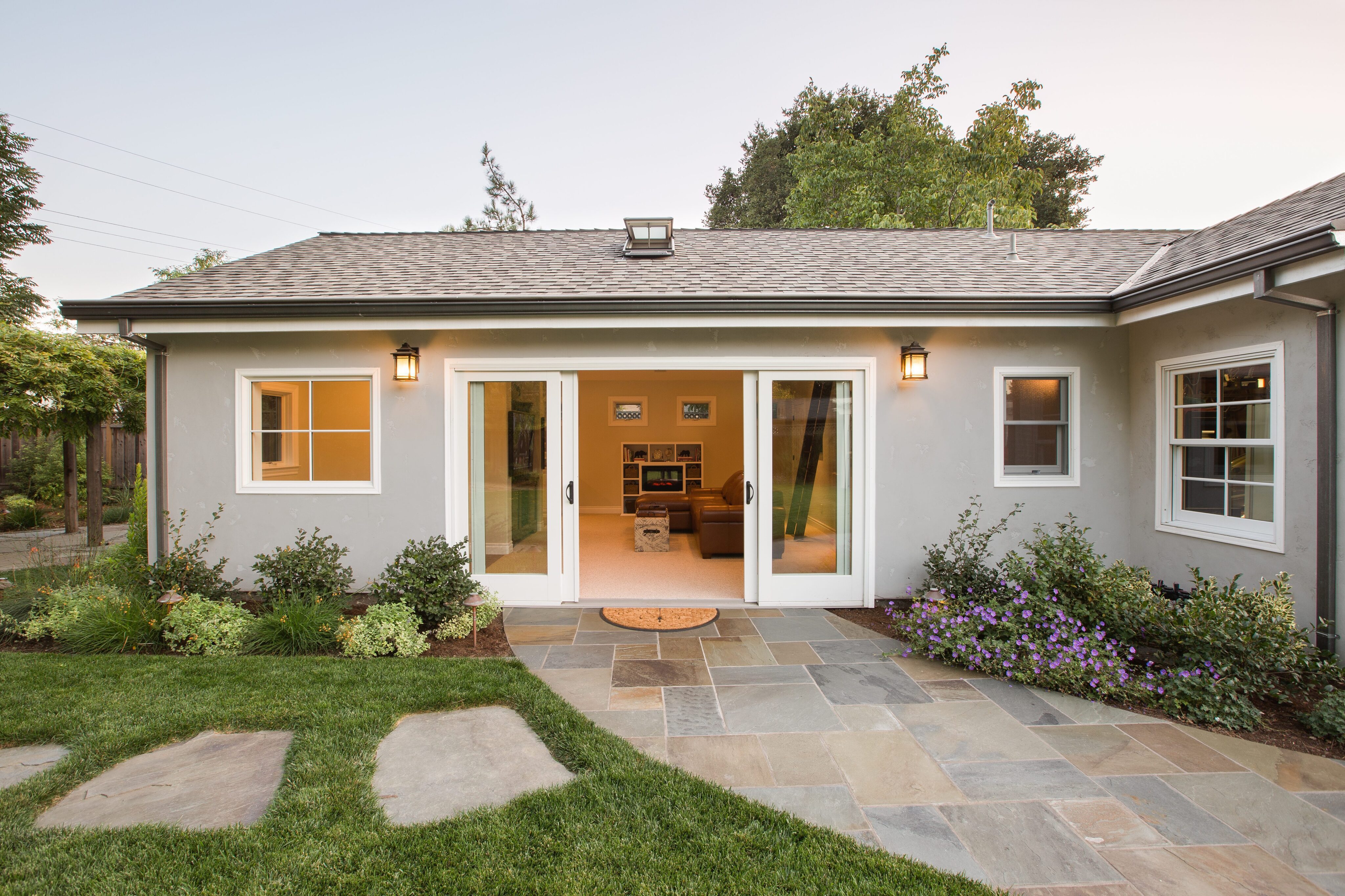
Most remodeling conversations start inside the house. But the exterior is the one part of a home every neighbor, buyer, and visitor sees before they see anything else, and it’s also one of the most misunderstood categories of remodeling work. Homeowners often assume “exterior remodel” means either a full teardown-and-rebuild or a coat of paint, with nothing useful in between. In practice, exterior home remodeling in Silicon Valley covers a wide range of scope, and knowing where a project falls on that range is what determines cost, permitting, and how disruptive the work actually is.
What an Exterior Remodel Actually Includes
An exterior remodel can touch any combination of the following, and most projects touch more than one:
- Siding and stucco. Replacing or repairing the home’s exterior cladding, whether that’s stucco, wood siding, fiber cement, or a mix.
- Windows and entry doors. Full window replacement changes both the look of a home and its energy performance, and a new entry door is often the single highest-impact, lowest-cost change available.
- Rooflines and roofing. Reshaping a roofline (adding a gable, changing a pitch) is structural work; replacing roofing material without changing the shape is not.
- Hardscape and landscaping. Driveways, walkways, retaining walls, and the planting beds and lighting around them shape how the whole property reads from the street.
- Front additions. Pushing a home’s footprint toward the street adds square footage and gives a home an entirely new entry sequence and street presence at the same time.
Our front addition and whole-house remodel, a 2025 NARI Meta Remodeling Award winner, is a good example: a 600-square-foot addition gave the home a new front porch and completely changed how it reads from the street, without changing anything about the lot itself.
Most homeowners come to us wanting one or two of these, and end up realizing during the design phase that a couple of the others are worth doing at the same time, since scaffolding, siding removal, and driveway access tend to overlap across categories. All kinds of combinations are possible when remodeling the exterior of your home.
Refresh or Full Exterior Overhaul?
The first real decision is scope, and it comes down to one question: is the home’s existing structure and layout fine, with only the surface and details feeling dated, or does the exterior actually need to change shape?
A refresh covers new siding or stucco, new windows and doors, updated exterior lighting, a repainted or re-roofed surface, and hardscape improvements, all within the home’s existing footprint and roofline. This is the more common project, and it’s also the faster and less disruptive of the two.
A full overhaul involves changing the roofline, adding a front addition, reconfiguring the entry sequence, or altering the home’s structural footprint. This is design-and-permit-intensive work, closer in scope to an interior structural remodel than to a surface-level update, and it’s where a project like the front addition above lives.
Neither is inherently the right answer. A home with good bones and a dated surface doesn’t need a full overhaul just because a homeowner wants a different look; a home with a genuinely non-functional entry or a garage-dominant street presence usually can’t be fixed with paint and new windows alone.

Signs Your Home Needs More Than a Surface Refresh
A few patterns tend to show up in homes that need a full overhaul rather than a refresh, and they’re worth checking for before committing to a scope:
- The garage dominates the street-facing elevation. Many ranch and suburban homes built between the 1950s and 1980s were designed around the garage door as the largest visual element on the front of the house. No amount of paint or landscaping changes that proportion; only a front addition or a redesigned entry sequence does.
- The entry doesn’t clearly feel like the entry. If a visitor has to look for the front door, or the path from the driveway to the door feels like an afterthought, the fix is usually architectural rather than cosmetic.
- The roofline is flat, low, or visually cramped relative to the home’s size. This is common in homes that have had additions over the years without anyone revisiting the overall roof design, and it’s a structural fix, not a paint fix.
- The home has been through multiple additions that were never visually reconciled. A house that’s grown in stages over decades often ends up with a front elevation that reflects none of its actual layout or history.
If none of these apply and the exterior just feels tired (dated materials, old paint, worn hardscape), a refresh is very likely the right scope, and a significantly faster and less expensive path to a meaningfully different-looking home.
What Exterior Remodeling Costs in Silicon Valley
Cost follows scope more than any single material choice. A refresh, such as new siding or stucco, windows, an entry door, and updated exterior lighting, typically runs from the mid-five figures into six figures depending on the size of the home and the materials chosen. A full overhaul that changes the roofline or adds square footage moves into a different cost category entirely, closer to what a home addition or structural interior remodel costs, since it involves the same structural engineering, framing, and permitting work.
A few cost factors show up on almost every exterior project, regardless of scope:
- Structural conditions behind existing siding or stucco, especially on older homes, that aren’t visible until the existing material comes off.
- Window and door sizing changes, which affect structural framing even when the change looks minor from outside.
- Hardscape and drainage work, which is often underestimated because it’s not part of the home itself but directly affects how well the rest of the project performs over time.
As with any remodeling category in this market, we recommend a 10 to 20 percent contingency for conditions that surface once existing materials come off the house. Our breakdown of home remodeling costs covers how this plays out across project types more broadly.

Permits for Exterior Work in Santa Clara County
Permit requirements depend heavily on scope, and this is one area where it’s easy for a homeowner to assume a project needs less permitting than it actually does. A like-for-like siding or roofing replacement, same material, same footprint, no structural changes, often requires a more limited permit than homeowners expect. Window replacement is subject to Title 24 energy compliance in most cases, which can affect what glazing options are actually available. Anything that changes a roofline, adds square footage, or alters the structural envelope of the home (a front addition, a reconfigured entry, a new dormer) requires a full building permit and typically structural engineering review, the same as an interior structural remodel would.
Permitting departments vary by city across Santa Clara County. San Jose exterior projects go through the Department of Planning, Building and Code Enforcement; Los Altos and Los Altos Hills each have their own building departments with separate review processes; Mountain View, Saratoga, Cupertino, and Sunnyvale each have their own Community Development or Building Divisions as well. A contractor with direct experience across these departments knows which conditions trigger which level of review before the project starts, not after a permit application gets kicked back. We manage the full permitting process for every exterior project we take on, regardless of which city’s department is involved.
If you are past the scope decision and want to see how the work is sequenced from permits to final inspection, our guide to planning an exterior remodel walks through it. Have to deal with an HOA? See our tips for an exterior remodel with an HOA.
Why Design-Build Matters More on Exterior Projects Than Homeowners Expect
An exterior remodel touches more trades than its scope might suggest: a siding or stucco crew, a window and door installer, a roofer, a landscaper, and often an electrician for exterior lighting, sometimes all in the same few weeks. When those trades are coordinated under one contract and one project manager, the sequencing holds together, siding goes on before window trim, hardscape grading accounts for new drainage before landscaping goes in, and nobody is waiting on someone else’s subcontractor to show up. Our fixed-price contracts and 6 percent change order rate reflect the same pre-construction planning process on exterior projects that we apply to kitchens, bathrooms, and whole-house remodels.
What This Looks Like in Practice
The front addition and whole-house remodel referenced earlier is a useful example of how far exterior scope can go when it’s planned alongside the rest of a home rather than treated as a separate project. The home’s garage-dominant elevation and lack of any real entry sequence were addressed by the same 600-square-foot addition that also created a new secondary suite and fourth bedroom inside, along with a new front porch that gave the home a genuine, welcoming presence from the street for the first time. None of that would have been possible with a surface-level refresh; it required rethinking the front of the home structurally, which is exactly the kind of project where design and construction need to be handled by the same team from the first sketch. You can see more exterior transformations across scope levels in our exterior remodeling portfolio and home addition portfolio.

Frequently Asked Questions About Exterior Home Remodeling
What does an exterior home remodel include?
An exterior remodel can include siding or stucco replacement, new windows and entry doors, roofline changes or re-roofing, hardscape and landscaping, and front additions that change a home’s footprint and street presence. Most projects combine two or three of these rather than addressing just one.
How much does it cost to remodel a home’s exterior in the Bay Area?
A surface-level refresh (siding, windows, an entry door, exterior lighting) typically runs from the mid-five figures into six figures, depending on home size and materials. A full overhaul that changes the roofline or adds square footage costs significantly more, closer to the range of a structural addition, since it involves the same engineering and permitting work.
What permits are needed for exterior renovations in Santa Clara County?
It depends on scope. A like-for-like siding or roofing replacement with no structural changes typically requires a more limited permit, while a project that changes a roofline, adds square footage, or alters the home’s structural envelope requires a full building permit and structural engineering review. Window replacement is subject to Title 24 energy compliance. Permitting departments differ by city across the county.
How do you improve curb appeal without a full remodel?
A new entry door, updated exterior lighting, refreshed landscaping and hardscape, and a fresh coat of paint or stucco color change are the highest-impact, lowest-scope changes available. None of these require altering the home’s structure or footprint.
Siding vs. stucco vs. wood: what’s most common in Silicon Valley remodels?
Stucco is the most common exterior material across Silicon Valley’s mid-century and later housing stock, since it was the standard finish on most ranch and suburban homes built from the 1950s through the 1980s. Wood siding shows up more often on older homes in neighborhoods like Willow Glen, and fiber cement siding has become a popular modern alternative to both when homeowners want a different look without stucco’s maintenance profile.
Whether you’re planning a full curb-appeal refresh or a front addition that changes how your home reads from the street, the same principle applies: the scope decision comes first, and everything else, cost, permitting, and timeline, follows from it. If you’re ready to talk through what your home’s exterior actually needs, schedule a complimentary planning consultation and we’ll walk through it with you.