

When homeowners plan a remodel, attention naturally flows to the rooms: the kitchen, the primary suite, the living spaces where daily life happens. The spaces in between — hallways, stair landings, entries, and transition zones — tend to get treated as connective tissue rather than as design opportunities.
That’s a missed opportunity. The way a home feels to move through is just as important as how each individual room performs. A hallway that feels tight and merely vestigial undermines the rooms it connects, no matter how well those rooms are designed. A stair landing that’s been given proportion, light, and a moment of visual interest makes the whole house feel more considered. An entry that creates a genuine sense of arrival sets the tone for everything that follows.
The homes that feel most cohesive are almost always the ones where someone paid attention to the in-between.
Why Transition Spaces Matter More Than They Seem
Transition spaces do several things simultaneously. They control the pace of movement through the home — a wide, well-lit corridor invites you forward, while a narrow one with a low ceiling creates a sense of compression that affects how the adjacent rooms feel by contrast. They frame views, both into and out of the rooms they connect. And they create moments of pause — visual rest stops that give the eye somewhere to land before moving on.
When these spaces are treated as leftovers — the width and height determined purely by code minimums, the finishes carried over from adjacent rooms without thought — the home ends up feeling like a collection of rooms rather than a single, unified environment. When they’re treated as intentional design moments, the opposite happens: the whole becomes more than the sum of its parts.
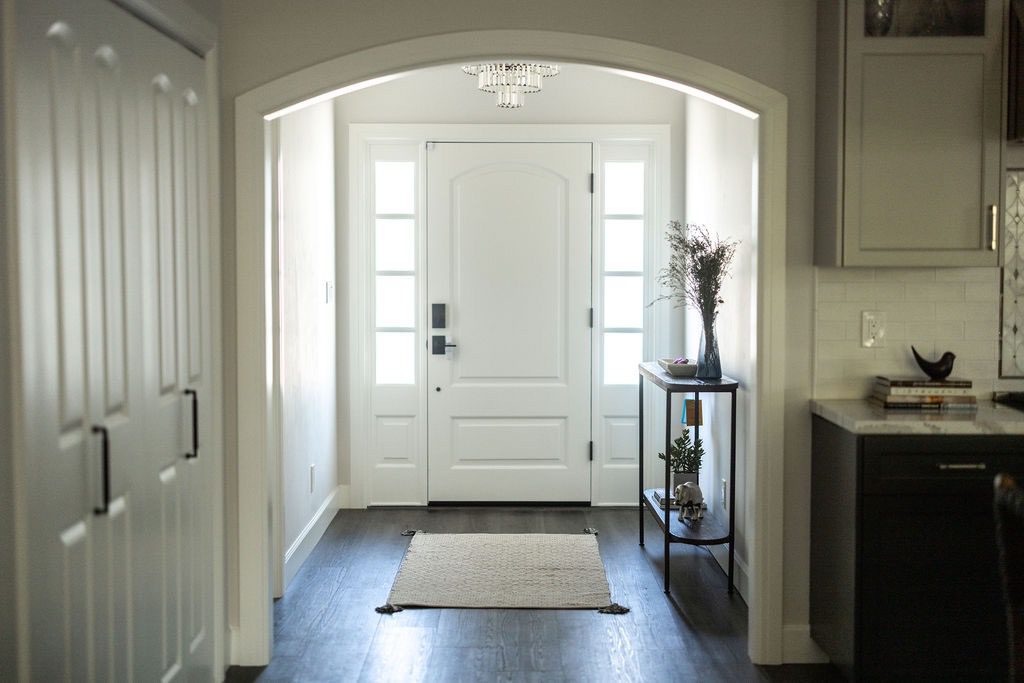
Entryway Remodel Ideas: Designing a Real Sense of Arrival
The entry is the first interior experience of the home, and it sets every expectation that follows. In many Santa Clara County homes — particularly those built in the 1970s through the 1990s — entries were designed as pure function: a door, a mat, and a path to the next room. The entry lacked a sense of arrival, there was no sense of threshold.
A thoughtful entryway remodel doesn’t require expanding the footprint. Some of the most effective changes are purely design-driven: raising the ceiling height where possible to create a sense of volume, introducing a material change underfoot that signals the transition from outside to in, adding a niche or built-in that gives the eye a focal point, or improving the natural light so the first impression isn’t dim and cramped.
Where the floor plan allows, creating a proper arrival zone — a place to set things down, hang up a coat, and pause before moving further into the home — dramatically changes how the entry feels. This doesn’t need to be large. A bench, a few hooks at the right height, and a drawer for the things that always end up on the floor represent a small intervention with a disproportionate impact on daily life.
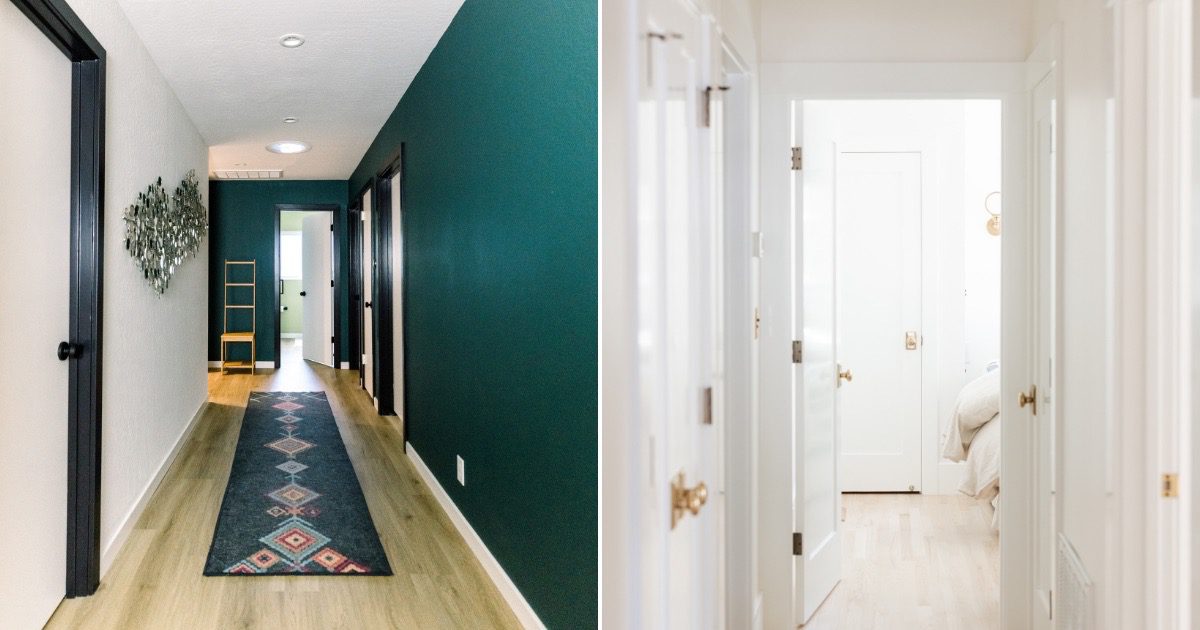
Hallway Design Ideas: Proportion, Light, and the Long View
The most common complaint about hallways is that they feel narrow and dark. Both problems are solvable, and often without structural changes.
Light is the most powerful tool available. A skylight or solar tube above a hallway transforms it from a transitional afterthought to one of the most pleasant spaces in the house. Where skylights aren’t feasible, thoughtful artificial lighting — recessed fixtures on a dimmer, wall sconces that wash light up and down rather than projecting it into the path — can create the same sense of brightness and openness that natural light provides.
Sightlines matter equally. Designing a hallway so that it terminates at something worth looking at — a window, a piece of art, a material change, or a carefully placed niche — gives it a destination quality that makes it feel intentional rather than incidental. A long hallway that ends at a blank wall feels like a dead end. The same hallway, with a frameable view at the terminus, feels like a carefully considered sequence.
Material transitions are another underused hallway design tool. A change in flooring material — or even just a change in the direction of the same material — can define the hallway as its own zone within the floor plan, rather than an extension of the rooms it connects. Combined with a subtle ceiling detail or a change in wall texture, these transitions create the kind of layered spatial experience that distinguishes a well-designed home.
Stair Landings: The Most Overlooked Design Moment in the House
In multi-story homes, the stair landing is passed through multiple times a day and almost never designed with any intention. It’s typically a flat surface at the top or midpoint of a staircase, sized to meet code, finished to match the floor, and left at that.
It doesn’t have to be. A landing that’s been given even modest design attention — a window that brings in natural light, a built-in bookcase or display niche, a ceiling detail that acknowledges the volume of the stairwell — becomes one of the small pleasures of the home. It’s a place that rewards attention rather than rushing past it.
In remodels where the staircase itself is being updated — new railing, new treads, or a reconfigured run — the landing is an obvious moment to design as part of the whole rather than as a leftover.
“
The in-between spaces are where a home either holds together or falls apart. When a hallway or landing is designed with the same care as the rooms around it, the whole house feels intentional — like someone thought about how it would feel to actually live there.”
~Shelly Yoder, Project Designer, Next Stage Design + Build
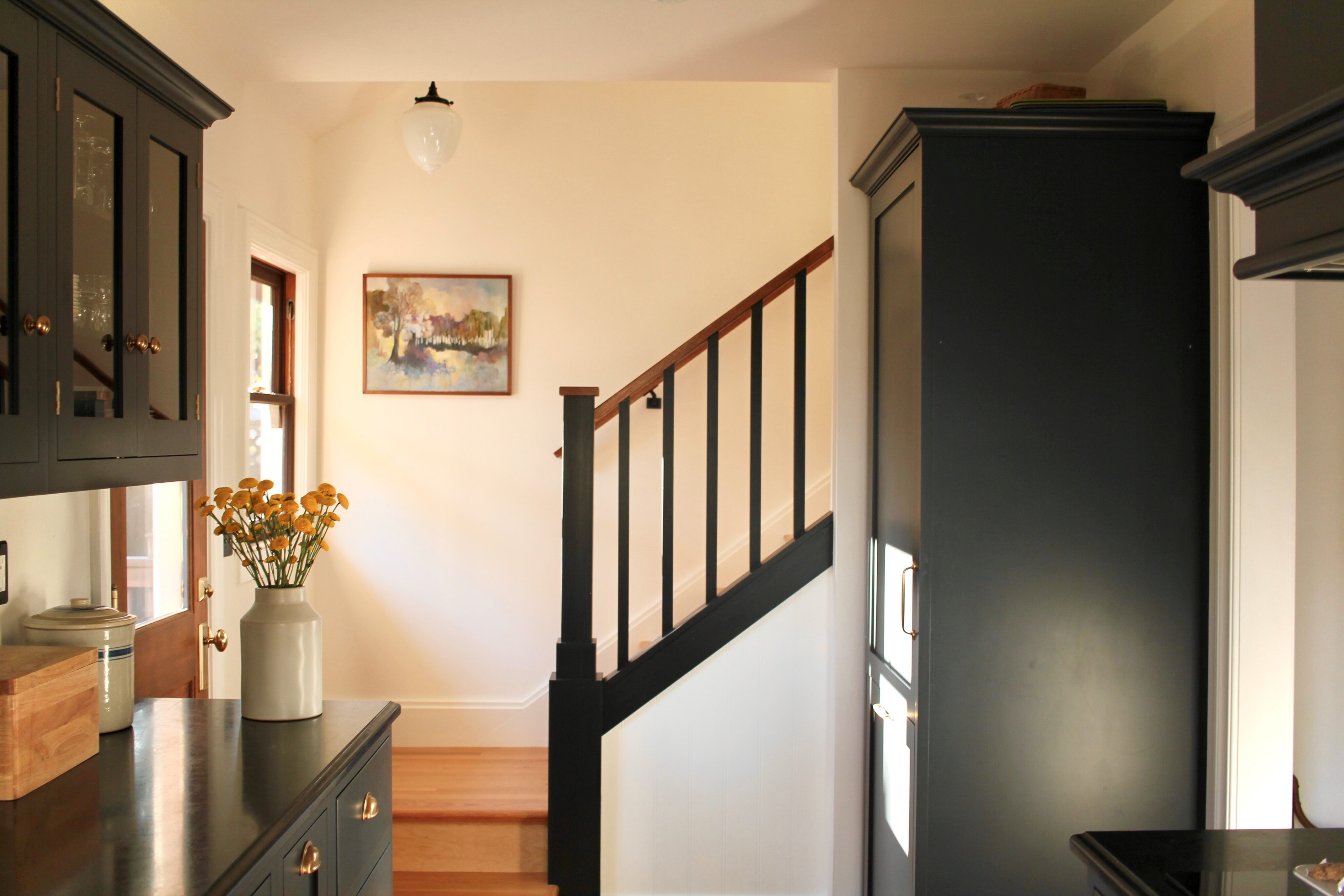
How to Make a Hallway Feel Intentional in a Remodel
The practical answer to this question is simpler than most homeowners expect: treat transition spaces as part of the design scope from the beginning, not as an afterthought once the rooms are resolved.
This means including them in the space planning conversation — asking how the hallway connects to the rooms on either side, what the sightlines are from key positions in the home, and whether there are opportunities to borrow light, create niches, or introduce material changes that help the space feel designed rather than leftover.
It also means budgeting for them. Transition spaces are often value-engineered out of a remodel scope when costs need to be reduced, and they’re usually the first thing homeowners regret skipping. The investment required to address a hallway or landing well is almost always modest relative to the rest of a project — and the return in terms of how the whole home feels is disproportionately large.

Bringing It All Together
The homes that feel most alive to move through aren’t necessarily the largest or the most expensively finished. They’re the ones where the design extends into every space — including the ones between the rooms.
Next Stage Design + Build works with homeowners across San Jose, Saratoga, Los Gatos, and other Santa Clara County communities on remodels where every space — including the in-between ones — is given the attention it deserves. If you’re planning a remodel and want to talk through how the full home can feel more cohesive and considered, we’d love to start that conversation.