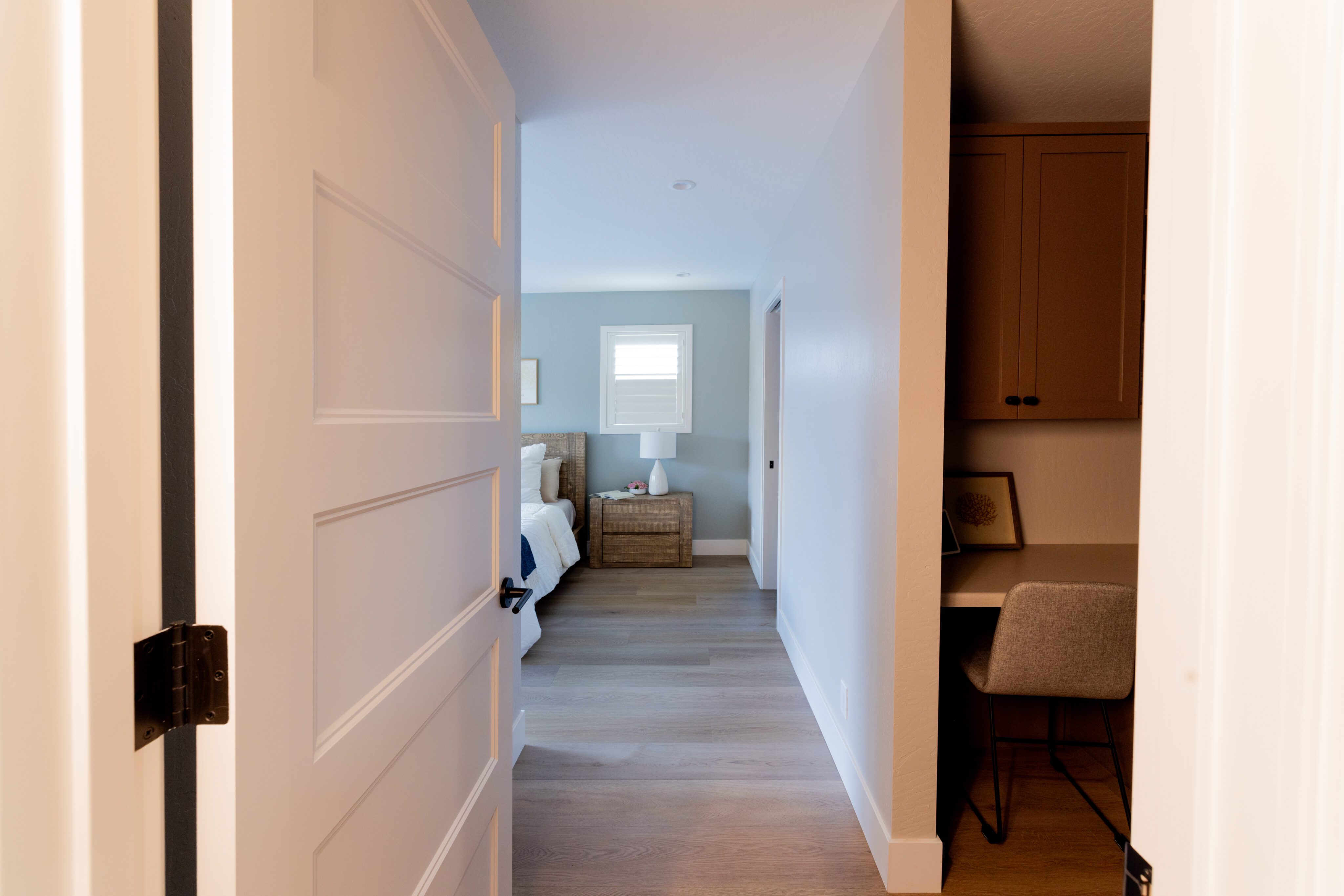
For many homeowners in Santa Clara County, the master suite is the room that was never quite finished. Functional enough — a bedroom with a bath attached — but never a retreat. The closet is too small, the bathroom layout requires negotiating around each other every morning, and the bedroom itself has never felt like a space designed for rest rather than just sleep.
This is one of the most common remodeling conversations we have with homeowners across San Jose, Cupertino, Sunnyvale, Saratoga, and Los Gatos. And it’s a conversation that almost always starts with the same question: do we remodel what we have, or do we add on?
The answer depends on the home, the existing floor plan, and what the homeowners actually need the space to do. But there’s a framework for thinking through it.
What a Master Suite Remodel Actually Includes
A well-designed master suite isn’t three separate rooms — bedroom, bathroom, and closet — that happen to share a wall. It’s a single system designed around how two people live, get ready, and rest. When those three components are designed together, with clear spatial logic connecting them, the suite feels cohesive and generous even at a modest square footage. When they’re designed independently or inherited from a floor plan that wasn’t well thought through to begin with, even a large suite can feel disjointed.
The bedroom itself requires more design attention than it typically receives in a remodel. Ceiling height, natural light, the location and size of windows, acoustic separation from the rest of the house — all of these shape how the room feels as a space for rest. A bedroom designed for sleep, reading, and quiet morning routines is a different brief than one designed primarily to look good.
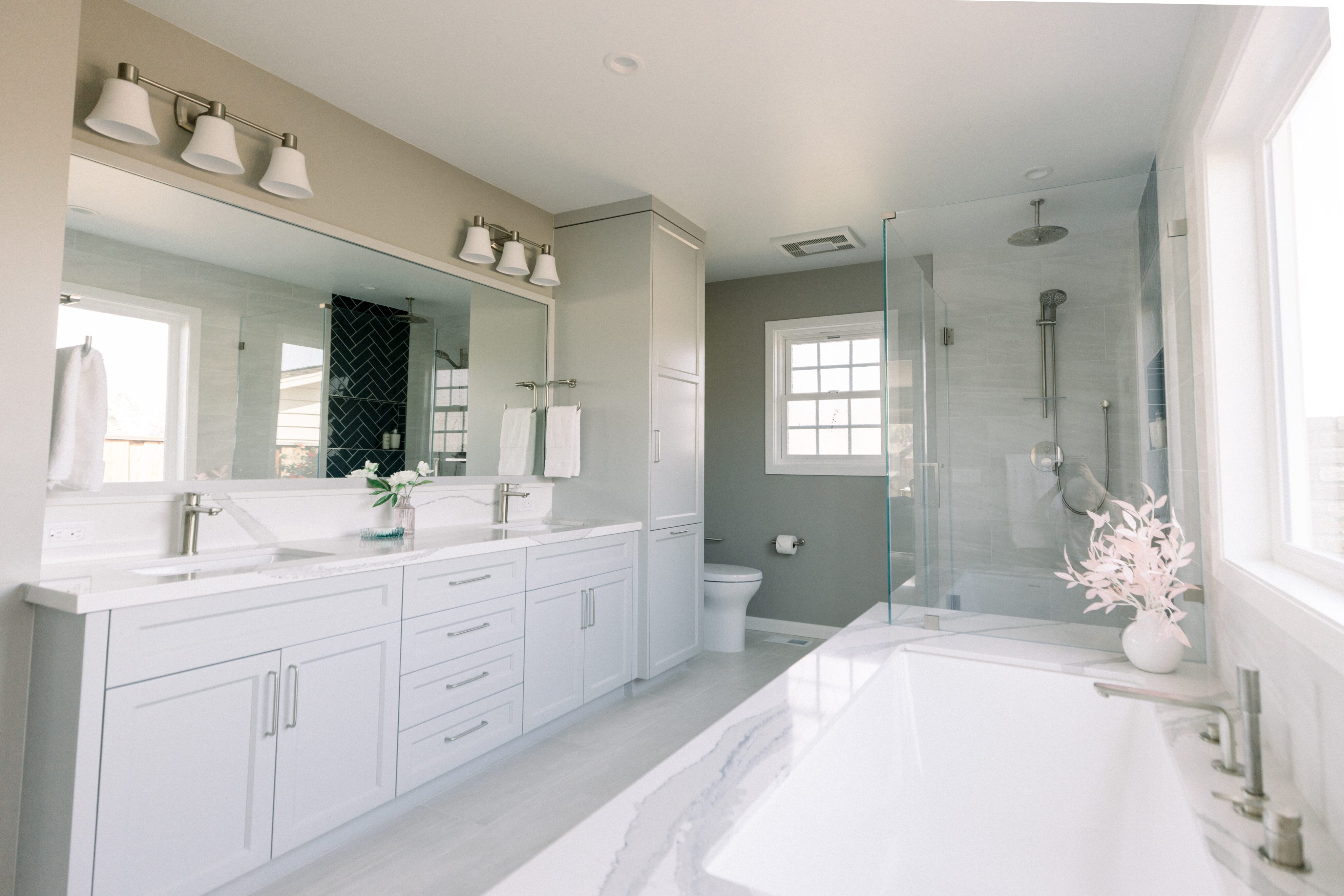
The bathroom is often where the most significant investment happens, and for good reason. Layout — the separation of wet and dry zones, the placement of vanities, the relationship between the shower and the tub if both are included — determines how functional the space is for two people using it simultaneously. Finishes and fixtures determine how it feels. Both deserve equal attention.
The closet is frequently the most undersized element of the three. In many Santa Clara County homes, master closets were built to the minimum viable standard and haven’t been updated since. A closet remodel designed around actual wardrobes, actual habits, and actual storage needs — rather than a generic layout — makes the entire suite function more smoothly.

Remodel vs. Addition: How to Evaluate the Right Approach
The decision between a master suite remodel and a master suite addition comes down to whether the existing floor plan can support the suite you want — spatially, structurally, and practically.
A remodel of the existing master suite makes sense when the overall square footage is adequate but the configuration is wrong: a bathroom layout that doesn’t work for two people, closets that are too small or poorly organized, or a bedroom that suffers from light, noise, or an awkward relationship to the spaces around it. These are problems that thoughtful redesign can solve without adding square footage.
A master suite addition makes sense when the existing space is fundamentally too small, or when the floor plan doesn’t have room to reconfigure without taking square footage from somewhere else the household needs. Additions can range from a targeted bump-out — adding a closet or expanding a bathroom by pushing a wall outward — to a full-room addition that creates an entirely new suite, sometimes above the garage or as a new wing off the main house.
In some cases, the right answer is a combination: remodeling the existing bedroom and bathroom while adding square footage specifically for the closet, or adding a small bathroom expansion while reconfiguring the closet within the existing footprint. The specific geometry of the home determines what’s possible.

How to Add a Master Suite to an Existing Floor Plan
Adding a master suite to an existing floor plan requires evaluating several things simultaneously: where the structural system allows for an addition, what the setback requirements are on the specific property, what the relationship of the new suite to the rest of the house will be, and how the addition will be accessed without disrupting the existing floor plan logic.
In Santa Clara County — across San Jose, Saratoga, Los Gatos, Campbell, and surrounding cities — setback rules determine how close a structure can be to the property line. These requirements vary by city and by zoning designation, and they directly constrain where an addition can be placed and how large it can be. An experienced local design-build team will assess these constraints early in the process, so the design is built around what’s actually permissible rather than adjusted later.
Structurally, additions require a foundation appropriate to the addition type — a second-story addition above the garage has different structural requirements than a ground-floor addition off the back of the house. Understanding these requirements early is essential for accurate budgeting and scheduling, since structural and foundation work typically happens first and sets up everything that follows.
The connection between the addition and the existing home — the transition zone — is one of the most important design moments in the project. A well-designed connection feels seamless: the new suite reads as part of the original home rather than an addition bolted on. This requires careful attention to ceiling heights, flooring transitions, roofline continuity, and exterior material consistency.
“
A master suite should function as one system, not three rooms that happen to be adjacent. When the bedroom, bath, and closet are designed together — with a clear sense of how both people move through the space — the result is a suite that feels genuinely restful rather than just upgraded.”
~Joy Allen, Design Supervisor, Next Stage Design + Build
Designing for the Next Decade
Many of the homeowners we work with in Santa Clara County are designing their master suite with a 10- to 15-year horizon in mind. This shapes the brief in meaningful ways.
Aging-in-place considerations — curbless shower entries, blocking in walls for future grab bars, wider doorways, single-floor living access — are most cost-effective when incorporated during a remodel or addition rather than retrofitted later. These aren’t compromises on design. When handled well, they’re invisible: the shower that’s accessible by choice rather than necessity, the doorway width that simply reads as generous.
The same long-term thinking applies to material selection. Natural stone, solid wood, and quality fixtures wear differently than their engineered counterparts — and in a space used every day for decades, the difference matters. Investing in materials that improve with age rather than simply degrading is one of the most reliable ways to ensure a master suite remodel retains its value and its appeal long after the project is complete.
The Suite Your Home Has Been Missing
A master suite that works — where the bedroom, bathroom, and closet are designed as one integrated system, where two people can use the space without negotiating, and where the whole thing feels like a retreat rather than just a room — is one of the highest-impact investments in a home. It changes how the house starts and ends every day.
Next Stage Design + Build works with homeowners across San Jose, Saratoga, Los Gatos, and other Santa Clara County communities on master suite remodels and additions of all scales. If you’re ready to think seriously about what your suite could be, we’d love to start that conversation.