

The experience of hosting is closely tied to how people move through the home. A kitchen can have beautiful finishes and still make hosting stressful if the path from the stove to the table crosses right through where guests naturally gather. As the holiday hosting stretch approaches, it’s worth treating kitchen and dining flow for entertaining the way you’d treat a floor plan: not as decoration, but as the thing that determines whether a gathering feels easy or crowded.
Circulation Is the Real Design Problem
Most hosting friction comes down to circulation, not square footage. A kitchen with plenty of room can still feel congested if the path between the refrigerator, the stove, and the sink crosses the same spot where guests tend to stand and talk. The fix isn’t always more space; it’s usually a clearer separation between the zone where food actually gets made and the zone where people gather.
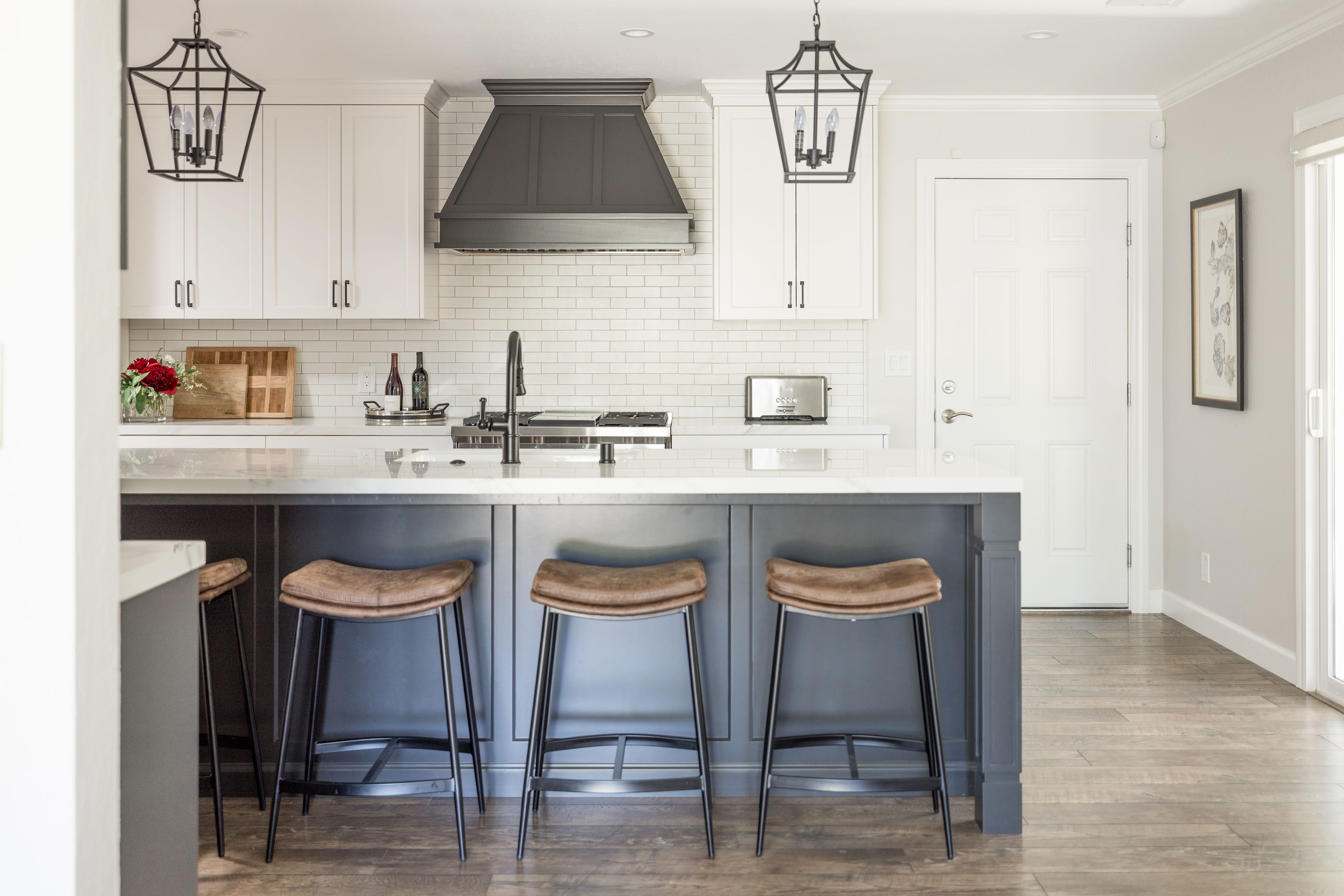
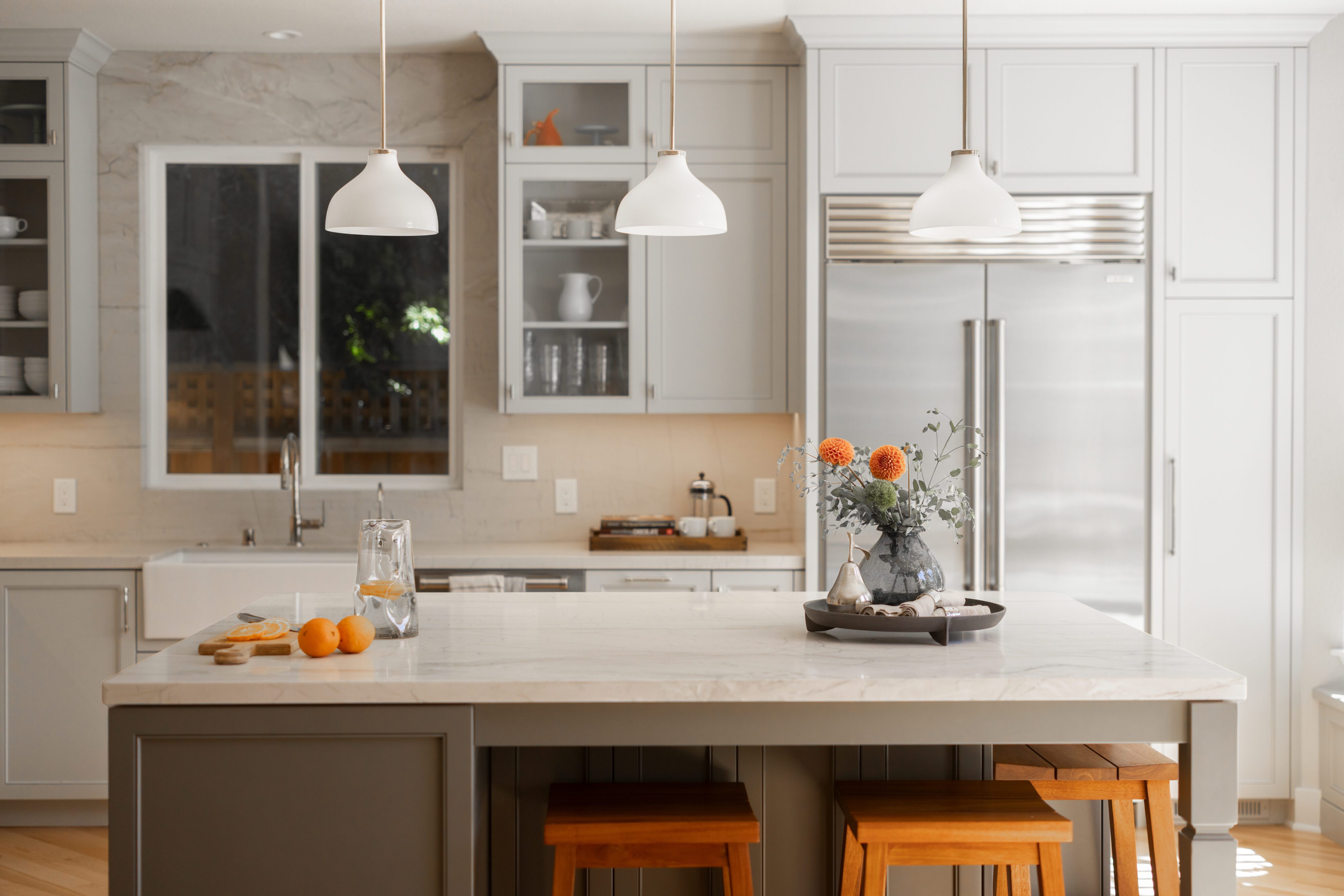
An island with seating on one side and workspace on the other does this well: it gives guests a place to sit and talk without putting them in the middle of the cook’s path. In an open-concept layout, the same principle applies to the space between the kitchen and dining area. If that transition is a single narrow opening, it becomes a bottleneck the moment more than a few people are moving through it at once.
Serving Zones and Beverage Stations Keep Work Areas Clear
One of the most effective changes we make in kitchens built for entertaining is designating specific landing spots for the parts of hosting that have nothing to do with cooking: a spot near the door for dishes coming in, a spot for serving platters heading out, and a beverage station that’s separate from the main prep area entirely.
A dedicated beverage station, whether that’s a wet bar, a bar cart nook, or simply a stretch of counter with its own small fridge, keeps guests refilling their own drinks out of the way of whoever is actually cooking. It sounds like a small detail, but in a kitchen without one, the drink station defaults to wherever there’s open counter space, which is usually right next to the stove.
Seating That Encourages Conversation, Not Just Function
Where people sit changes how a gathering feels as much as where they stand. Counter seating along an island puts guests close to the action without putting them in the workflow. A banquette or built-in bench in a dining nook does something similar for larger sit-down gatherings: it seats more people in less space than a full ring of chairs, and it tends to encourage conversation across the table rather than everyone facing the same direction.
The goal isn’t to maximize the number of seats a space can technically hold. It’s to arrange seating so that whoever’s in the kitchen while dinner finishes doesn’t feel cut off from whoever’s already at the table.
Indoor-Outdoor Flow Extends the Space Without Adding Square Footage
For homes with a patio, deck, or backyard entertaining area, the connection between the kitchen and the outdoor space matters as much as anything inside. A wide sliding or folding door that opens the kitchen and dining area directly onto a patio effectively doubles the usable hosting space for as long as the weather cooperates, and it means the cook isn’t cut off from guests who’ve moved outside. Our modern kitchen addition and indoor-outdoor transformation shows what this looks like when the connection between kitchen and outdoor space is planned from the start rather than added as an afterthought.

Why This Gets Planned at the Design Stage, Not the Decorating Stage
Flow problems are hard to fix after a kitchen is built, because the fixes usually involve moving plumbing, widening an opening, or relocating an island, not swapping out a light fixture or repainting a wall. This is why circulation and entertaining patterns need to be part of the conversation during design, alongside cabinet layout and material selections, rather than something addressed after the fact with furniture rearranging.
During the design phase, we ask a few questions most homeowners haven’t thought to ask themselves: how many people do you typically host, and how often? Does hosting mean a sit-down dinner, a buffet-style gathering, or both depending on the occasion? Is there an outdoor space that should function as an extension of the kitchen, or is the entertaining space entirely indoors? The answers shape decisions like island size and shape, where plumbing and gas lines run, and whether an opening between rooms needs to be a doorway or a full removed wall. Getting these decisions right during design is what prevents a beautiful kitchen from also being an inconvenient one.
Designing for Both Everyday Meals and Larger Celebrations
The best-planned kitchens for entertaining don’t require a full reconfiguration every time the guest count changes. An island that seats four for a weeknight dinner can serve as a buffet line during a larger gathering without moving furniture. A dining table with a leaf, or a nearby flex space that can hold a folding table when needed, lets the same room handle a Tuesday dinner and a twenty-person holiday gathering without feeling either too empty or too cramped. Thoughtful planning during the design phase, not last-minute rearranging, is what makes that flexibility possible.
Frequently Asked Questions About Kitchen and Dining Flow
How do you design a kitchen for entertaining and everyday use?
Separate the cooking workflow from the gathering space with an island or clear sightline, add a dedicated beverage or serving zone away from the main prep area, and choose seating that works for both a quick weeknight meal and a larger group.
What makes kitchen and dining flow work well for hosting?
Clear circulation paths that don’t cross the cook’s workflow, a wide enough opening between kitchen and dining areas to avoid bottlenecks, and defined zones for serving and drinks so guests aren’t standing in the middle of meal prep.
Where should a beverage station go in an open-concept kitchen?
Away from the primary cooking zone, ideally near the edge of the kitchen closest to where guests naturally gather, such as near an island’s seating side or adjacent to the dining area, so refilling a drink doesn’t mean walking through the cook’s workspace.
How do you avoid kitchen bottlenecks when hosting guests?
Widen or open transitions between the kitchen and adjoining spaces, keep a clear path between major appliances, and separate serving and beverage zones from the primary prep area so multiple activities can happen at once without colliding.
How can indoor-outdoor flow improve holiday entertaining at home?
A wide door connection between the kitchen or dining area and an outdoor patio effectively adds usable space for a gathering, keeps the cook connected to guests who move outside, and gives a party room to breathe without requiring a larger home.
If your kitchen makes hosting feel like more work than it should, our kitchen remodeling portfolio has more examples of layouts built around exactly this kind of flow, and we’re happy to talk through what would make the biggest difference in yours.